
12 events found.
Events
Filters

IDEAS/STAT Optimization Seminar
Herman P. Schwan Distinguished Lecture: “Engineering Proteins, Genomes, Viruses & Organs” (George Church, Harvard & MIT)
/
Zoom
Our exponential technologies for reading, writing genomes and epigenomes combined with AI-ML has enabled large libraries and selections for radical new functions — e.g. resistance to all viruses, novel delivery […]
Spring 2025 GRASP Seminar: Nat Trask, University of Pennsylvania, “Geometric structure preservation in probabilistic digital twins”
/
Wu & Chen Auditorium
This will be a hybrid event with in-person attendance in Wu and Chen and virtual attendance on Zoom. ABSTRACT Motivated by the ever-increasing success of machine learning in language and […]
MEAM Seminar: “Digital Twins for the Earth System”
/
Wu and Chen Auditorium (Room 101), Levine Hall
3330 Walnut Street, Philadelphia, PA, United States
Reliable forecasts of the Earth system are crucial for human progress and safety from natural disasters. Artificial intelligence offers substantial potential to improve prediction accuracy and computational efficiency in this […]
CBE Doctoral Dissertation Defense: “A molecular understanding of the structure-property relationships of model end-linked polymer networks” (Han Zhang)
/
Room 35, Singh Center for Nanotechnology
3205 Walnut Street, Philadelphia, PA, United States
Abstract: Polymer networks, including thermoplastics, thermosets, elastomers and gels, are among the most versatile and widely utilized polymeric materials, with applications spanning drug delivery systems, membranes and implantable devices. A […]
CIS Seminar: “Thinking Outside the GPU: Systems for Scalable Machine Learning Pipelines”
/
Wu & Chen Auditorium
Scalable and efficient machine learning (ML) systems have been instrumental in fueling recent advancements in ML capabilities. However, further scaling these systems requires more than simply increasing the number and […]
ASSET Seminar: “Steering Machine Learning Ecosystems of Interacting Agents”
/
Amy Gutmann Hall, Room 414
3333 Chestnut Street, Philadelphia, United States
Abstract: Modern machine learning models—such as LLMs and recommender systems—interact with humans, companies, and other models in a broader ecosystem. However, these multi-agent interactions often induce unintended ecosystem-level outcomes such […]
Spring 2025 GRASP & CIS Seminar: Yossi Gandelsman, University of California, Berkeley, “Interpreting the Inner Workings of Vision Models”
/
Heilmeier Hall (Room 100), Towne Building
220 South 33rd Street, Philadelphia, PA, United States
This will be a hybrid event with in-person attendance in Towne 100 Heilmeier Hall and virtual attendance on Zoom. ABSTRACT In this talk, I present an approach for interpreting the […]
CBE Seminar: “Toward Efficient and Synthesizable In-silico Molecular Design” (Wenhao Gao, MIT)
/
Wu and Chen Auditorium (Room 101), Levine Hall
3330 Walnut Street, Philadelphia, PA, United States
Abstract: The discovery of functional molecules plays a fundamental role in advancing chemical science and engineering, yet it remains a costly and time-intensive process. Recent advances in computational methods, particularly […]
IDEAS/STAT Optimization Seminar
/
Amy Gutmann Hall, Room 414
3333 Chestnut Street, Philadelphia, United States
Zoom link: https://upenn.zoom.us/j/98843354016
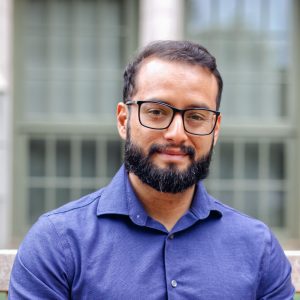
BE Seminar – “Engineering cell state-specific gene regulation with AI and synthetic biology” (Sebastián Castillo Hair, University of Washington)
/
Cells across tissues, developmental stages, and disease conditions adopt distinct intracellular states – epigenomic, transcriptomic, and proteomic profiles – to compartmentalize function in time and space. The ability to write […]
Spring 2025 GRASP Seminar: Hersh Sanghvi, University of Pennsylvania, “Online Controller Adaptation with Meta-Learned Models”
/
Wu and Chen Auditorium (Room 101), Levine Hall
3330 Walnut Street, Philadelphia, PA, United States
This will be a hybrid event with in-person attendance in Wu and Chen and virtual attendance on Zoom. ABSTRACT Control tuning and adaptation present a significant challenge to the usage […]